
Medically reviewed by Dr Amol Bhanushali, thoracic and chest surgeon.
Summary: Pleurisy is inflammation of the membranes lining your lungs and chest, causing sharp chest pain that worsens when you breathe or cough. It is most often caused by a viral infection and settles within days, but it can also signal serious conditions like pneumonia, a blood clot on the lung, or, rarely, lung cancer. See a doctor for any sharp chest pain with breathing, and seek emergency care if you have severe breathlessness, or chest pain with dizziness or coughing up blood.
That sharp, stabbing pain in your chest every time you breathe in? It could be pleurisy, and while it is often harmless, it is one symptom you should never ignore.
Pleurisy itself is a sign of inflammation, and the important question is always what is causing it. Most causes are minor, but some are serious and need prompt care.
This guide explains the symptoms, the causes, and, crucially, how to tell when pleurisy becomes an emergency.
What is pleurisy?
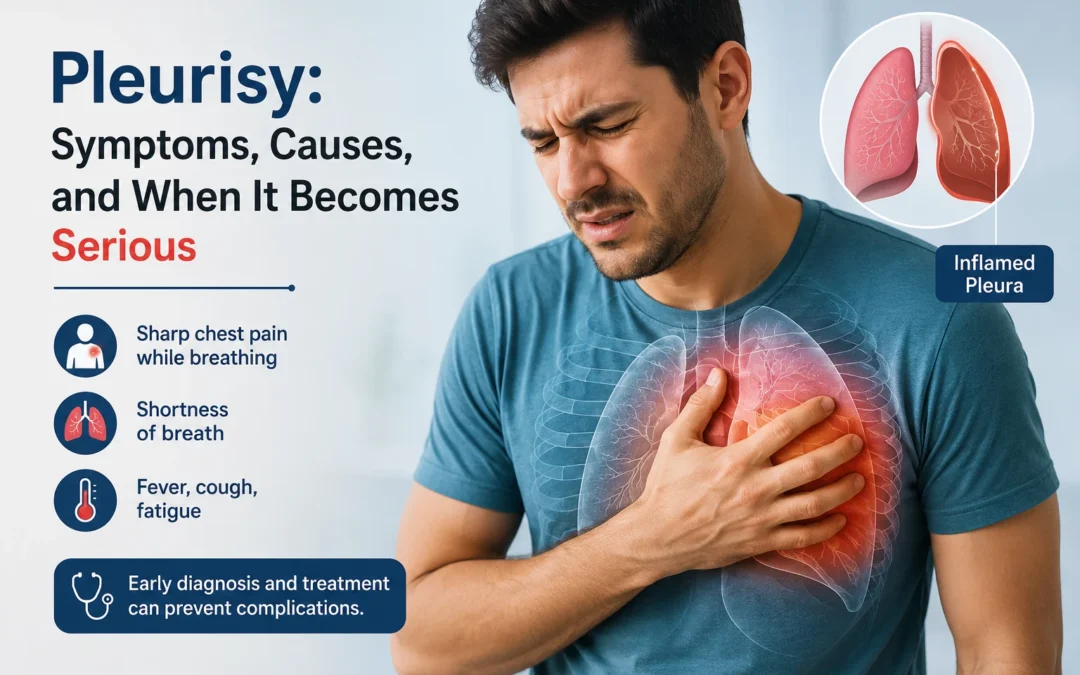
Pleurisy is inflammation of the pleura, the two thin membranes that line your lungs and chest cavity. When these inflamed layers rub together as you breathe, they cause a sharp, stabbing chest pain. Pleurisy is not a disease in itself but a sign of an underlying condition, which is why identifying the cause matters.
Normally, the two pleural layers glide smoothly over each other as you breathe.
When they become inflamed, that smooth movement is lost, and the surfaces catch and rub, producing the characteristic sharp pain. This is why the pain is so closely tied to breathing.
Because pleurisy is a symptom rather than a diagnosis, the focus is always on finding and treating what caused the inflammation.
What are the symptoms of pleurisy?
The main symptom of pleurisy is a sharp, stabbing chest pain that worsens when you breathe in, cough, or sneeze. Other symptoms may include shortness of breath, a dry cough, and sometimes fever, depending on the cause. The pain often eases when you hold your breath or press on the affected area.
Typical symptoms include:
- Sharp chest pain: worse on breathing in, coughing, or sneezing.
- Shortness of breath: often because breathing deeply hurts.
- A dry cough: commonly accompanying the pain.
- Fever: if an infection is the underlying cause.
- Pain on one side: usually localised to the affected area.
The pain that worsens with breathing is the hallmark of pleurisy. If your chest pain does not change with breathing, it may point to a different cause, which a doctor can assess.
What causes pleurisy?
Pleurisy is most commonly caused by a viral infection, which usually clears within days. However, it can also be caused by more serious conditions including bacterial pneumonia, a blood clot on the lung (pulmonary embolism), autoimmune diseases, and, rarely, lung cancer. Identifying the cause is essential, as treatment depends entirely on it.
Here are the main causes:
| Cause | Seriousness | Notes |
| Viral infection | Usually mild | Most common; settles in days |
| Bacterial pneumonia | Serious | Needs antibiotics and monitoring |
| Pulmonary embolism | Emergency | Blood clot on the lung, life-threatening |
| Autoimmune conditions | Variable | Such as lupus or rheumatoid arthritis |
| Lung or chest tumour | Serious | Less common, needs specialist care |
While viral pleurisy is the most frequent cause, pulmonary embolism is the most frequent serious condition linked to pleuritic chest pain. This is exactly why any sharp chest pain deserves proper assessment rather than being brushed off.
When does pleurisy become serious?
Pleurisy becomes serious when it is caused by a dangerous underlying condition or leads to complications like a build-up of fluid around the lungs (pleural effusion). Warning signs include severe breathlessness, chest pain with dizziness or fainting, coughing up blood, or a high fever. These need urgent medical attention.
Sometimes inflammation leads to fluid collecting between the pleural layers, a pleural effusion. The most common causes of pleural effusion include pneumonia, heart failure, and malignancy, some of which are serious.
Seek emergency care if you have:
- Severe breathlessness: difficulty breathing at rest.
- Chest pain with dizziness or fainting: possible signs of a serious cause.
- Coughing up blood: which always needs urgent assessment.
- High fever with worsening symptoms: suggesting a significant infection.
When in doubt, it is always safer to get checked. Serious causes of pleurisy are very treatable when caught early.
How is pleurisy diagnosed and treated?
Pleurisy is diagnosed through a physical examination and tests such as a chest X-ray, blood tests, or a scan to find the underlying cause. Treatment targets that cause, whether antibiotics for infection, anticoagulants for a clot, or other specific care, along with pain relief to ease the chest discomfort.
Diagnosis focuses on identifying what is behind the inflammation.
A doctor will listen to your chest, review your symptoms, and often arrange a chest X-ray or scan. This distinguishes a simple viral pleurisy from more serious causes that need specific treatment.
Treatment then addresses the cause directly. Viral pleurisy needs mostly rest and pain relief, while bacterial, clot-related, or other causes need targeted treatment. For persistent or unexplained cases, a chest specialist in Thane can investigate thoroughly.
Frequently asked questions
Is pleurisy serious? It depends on the cause. Viral pleurisy is usually mild and settles within days. However, pleurisy caused by pneumonia, a blood clot, or other conditions can be serious. Because the cause determines the risk, any sharp chest pain with breathing should be assessed by a doctor.
How long does pleurisy last? Viral pleurisy usually improves within a few days to two weeks. Pleurisy from other causes lasts until the underlying condition is treated. If your chest pain persists beyond a couple of weeks or worsens, you should see a doctor to identify and treat the cause.
Can pleurisy go away on its own? Viral pleurisy often resolves on its own with rest and pain relief. However, because pleurisy can be caused by serious conditions, you should not assume it will pass. A doctor should confirm the cause, especially if symptoms are severe, persistent, or worsening.
What is the difference between pleurisy and pleural effusion? Pleurisy is inflammation of the pleural membranes, causing sharp pain. Pleural effusion is a build-up of fluid between those membranes, which can result from the same underlying conditions. Effusion often causes breathlessness and may need the fluid to be drained.
When should I go to hospital for chest pain? Seek emergency care for severe breathlessness, chest pain with dizziness or fainting, coughing up blood, or crushing chest pain. These can signal serious conditions. When chest pain is severe or accompanied by these warning signs, it is always safer to seek urgent medical help.
Why choose Dr Amol Bhanushali for chest and lung concerns
Because pleurisy can range from a harmless virus to a serious underlying condition, accurate assessment matters, and this is where the practice stands out in Thane.
The clinic thoroughly evaluates chest pain and pleurisy, identifying the underlying cause and providing the right treatment, backed by advanced thoracic surgical expertise for serious cases. Every patient receives a careful assessment and clear guidance on what their symptoms mean.
That expert, careful approach is what makes the practice a trusted choice as a chest physician in Thane.
Pleurisy is often harmless, but because it can occasionally signal something serious, that sharp chest pain is always worth taking seriously. Getting the cause identified brings both peace of mind and, where needed, prompt treatment. If you have chest pain that worsens when you breathe, book a consultation today for an expert assessment.