
Lung Cancer Diagnosis and Treatment in Thane
The best hope of a cure is through early diagnosis and surgical skill.
A persistent cough that won’t clear, coughing up blood, unexplained weight loss, or breathlessness that keeps getting worse are symptoms that deserve a scan, not another round of cough syrup. Caught early, lung cancer is genuinely treatable with surgery.
Dr Amol Bhanushali completed his fellowship in Thoracic Surgery at Tata Memorial Hospital, India’s leading cancer centre, and has over 15 years of experience performing lung cancer surgery across Thane and Mumbai, including at Dr Bhanushali Hospital, Kaushalya Hospital, and Hinduja Hospital. His practice covers the full range of lung cancer procedures, from lobectomy and pneumonectomy to minimally invasive resection where the tumour’s stage and location allow it.
Every case is worked up with proper staging before surgery is even discussed, since not every lung cancer patient needs the same operation, and not every patient needs surgery at all. Multidisciplinary input from oncology and radiology is built into the plan from the first consultation.
If you or a family member has a lung nodule, a mass flagged on a CT scan, or symptoms that haven’t been explained yet, book a consultation with Dr Amol Bhanushali in Thane. Early assessment is what keeps every treatment option genuinely open.
Understanding Lung Cancer
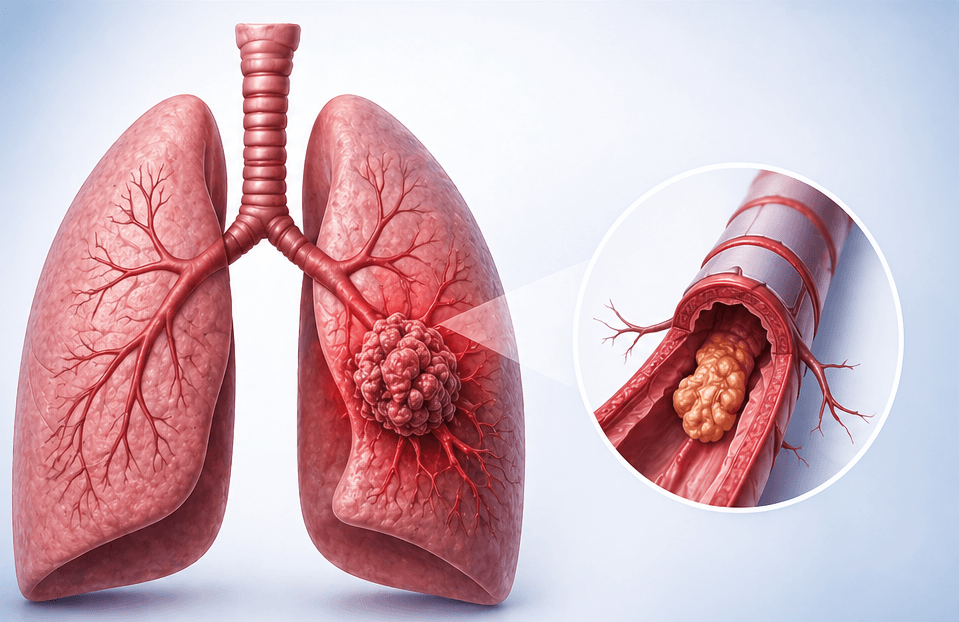
The greatest risk factor is tobacco smoking, which causes approximately 85 per cent of lung cancers. Nevertheless, an increasing percentage of lung cancers, especially adenocarcinoma, are found in non-smokers, particularly females in India, and are likely to be associated with indoor air pollution, cooking fumes, and inherited predispositions such as EGFR mutations.
Symptoms and Presentation
Silently, early lung cancer is infamous. With the growth of the tumour, patients can have a persistent new cough or alteration of an existing cough, haemoptysis (coughing blood), breathlessness, chest pain, hoarseness, frequent chest infections, unexplainable weight loss, and fatigue. Symptoms of metastases, such as bone pain, neurological or abdominal discomfort, may be a sign of advanced disease.
Staging: Why It Determines Treatment
The stage of lung cancer (I- IV) identifies the possibility of surgery and extra interventions. Stages I-IIIA can be surgically resected. The disease at stages IIIB and IV is usually treated with systemic therapy, chemotherapy, targeted therapy, or immunotherapy, usually in combination with radiation. Proper staging is thus very important with the use of CT, PET-CT, endobronchial ultrasound (EBUS), and mediastinoscopy.
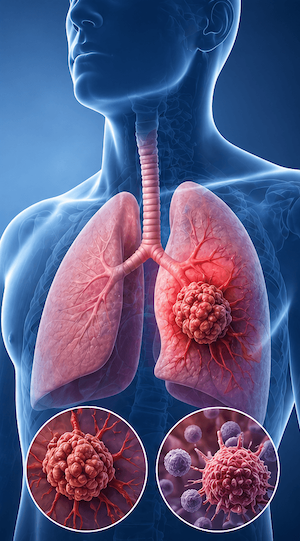
Surgical Treatment of Lung Cancer
Pneumonectomy: ectomy of the whole lung is necessary in cases where the tumour extends into central airways or main pulmonary vessels that cannot be spared. It is a large surgery with increased perioperative risk and high effects on the enduring performance of lungs; however may be effective in the right patient chosen.
Long resections of the chest wall, diaphragm, pericardium, or superior sulcus (Pancoast tumours) are complicated procedures, and they need multidisciplinary planning and surgical skills in chest wall reconstruction.
Minimally Invasive Lung Surgery (VATS)
Multimodal Treatment
In case of locally advanced yet possibly resectable tumours (stage IIIA), the neoadjuvant (pre-operative) chemotherapy or chemoradiation can be employed to stage down the tumour prior to surgery. Stage II and III disease suggest adjuvant postoperative chemotherapy. Targeted oral therapy plays a vital role in tumours that have had an EGFR mutation, as well as other driver mutations. Checkpoint inhibitor immunotherapy has radically transformed the advanced disease treatment scene.
Risk FactorsPassive smoking of tobacco, exposure to radon gas, asbestos, occupational carcinogens, COPD, pulmonary fibrosis, family history, and EGFR mutations in non-smokers. |
ScreeningHigh-risk people who should undergo low-dose CT (LDCT) SC are heavy smokers between 50 and 80 years old. The screening and early detection of the disease significantly increases the survival rates, as it helps detect the stage I disease. |
Prognosis and Follow-Up
Expert Lung Cancer Surgery in Thane
Book Appointment
+91-9920024001
9920024001