Pneumothorax

A collapsed lung: when air where it shouldn’t be becomes a surgical emergency

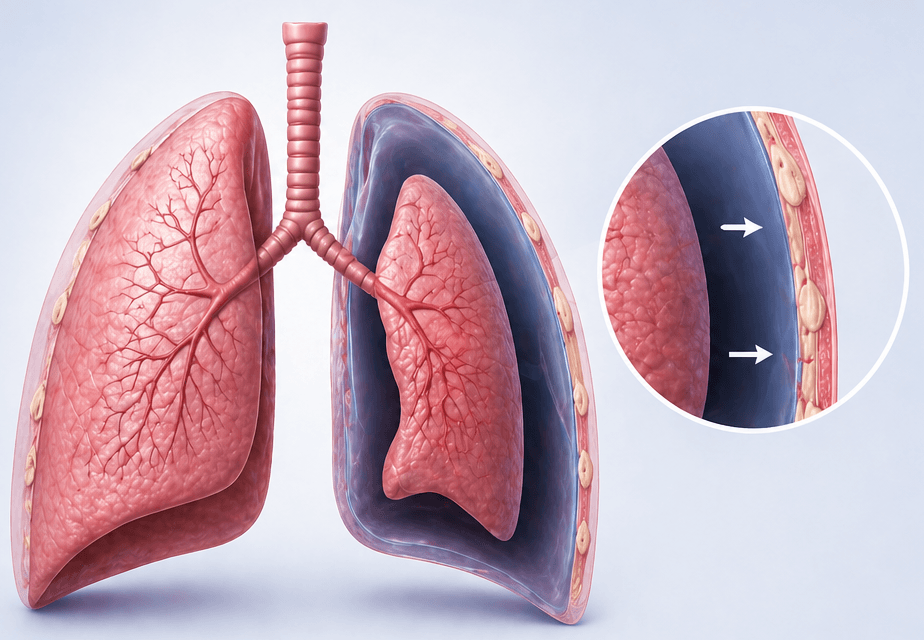
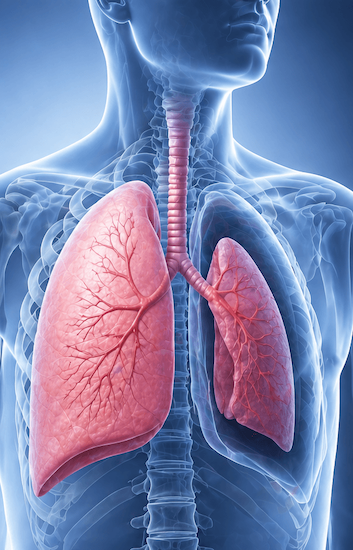
Pneumothorax is a condition in which air gets trapped in the pleural space, which is the space between the lung and the chest wall, and leads to the partial or complete collapse of the lung. Whereas in a few cases this is treated by merely debridement, recurrent or tension pneumothorax requires certain surgical intervention to avert life-threatening recurrence.

What Happens in a Pneumothorax?

In the healthy state, the pleural space is a closed vacuum that aids in maintaining the lung in its expanded state. When air escapes into this space either via the lung surface or due to a defect in the chest wall, the negative pressure is lost, and the lung ends up shrinking inwards. The extent of collapse varies from a small rim of air at the apex to almost total collapse of the whole lung. In tension pneumothorax, there is a one-way valve mechanism that means that the air may build up under pressure, gradually moving the heart and great vessels, a condition that is very fatal unless decompressed at the time.

Types of Pneumothorax

Principal Spontaneous Pneumothorax (PSP).

Develops in healthy living persons without chronic lung disease. Usually is usually seen in young men who are tall and thin (1535) because of rupture of subpleural blebs (small air pockets) in the apex of the lungs. Large recurrence percentage, up to 50% following the first episode.

Traumatic Pneumothorax

Due to chest trauma, blunt, rib fracture, penetrating wounds, or iatrogenic (post-operative, mechanical ventilation). Frequently accompanied by haemothorax (blood in the pleural space).

Secondary Spontaneous Pneumothorax (SSP).

Presents with background lung disease, COPD, emphysema, tuberculosis, asthma, cystic fibrosis, interstitial lung disease, or Langerhans cell histiocytosis. More severe due to reduced lung capacity. Needs to be handled more vigorously.

Tension Pneumothorax

A medical emergency. The accumulating air leads to compression of the heart and great vessels, which results in cardiovascular collapse. Decompression of the needle and a subsequent insertion of a chest tube are life-saving.

Symptoms

The typical picture is the abrupt ipsilateral chest pain (sharp, pleuritic) and dyspnoea. Symptoms in primary spontaneous pneumothorax in young healthy patients are sometimes surprisingly mild. A small pneumothorax leads to severe respiratory distress in the case of secondary pneumothorax, where underlying lung disease is present due to damage to the remaining lung functioning capacity. Tension pneumothorax is associated with acutely developing breathlessness, hypotension, cyanosis, distended neck veins, tracheal deviation, a real emergency.

Diagnosis and Initial Management

The typical finding with chest X-ray is the lack of lung markings past the visceral pleural line, and a collapsed lung edge is present. CT chest gives accurate information about the size and underlying lung pathology (blebs, bullae, emphysema). The first management is based on the severity: observation in patients with small pneumothorax in a stable condition, needle removal or intercostal drainage in larger collapses, and emergency surgery in tension pneumothorax.

When is Surgery Needed?

Surgical intervention is advised for subsequent pneumothorax on the same side (recurrence), for initial pneumothorax in some high-risk conditions (pilots, divers, remote locations), bilateral pneumothorax, and non-re-expansion of the lung after drainage. Surgery is intended to treat the cause of the air leak and destroy the pleural space to prevent the re-development.

Surgical Treatment: VATS Surgery

The surgical intervention for pneumothorax is VATS (Video-Assisted Thoracoscopic Surgery), the gold-standard. Through general anaesthesia, a thoracic surgeon explores the whole pleura using a camera, locates and excises the offending bullae or blebs (usually at the apex of the upper lobe), and finally does pleurodesis, intentional scarring of the pleural surfaces to prevent recurrence. Pleurodesis methods can be mechanical abrasion (rubbing the pleura with a gauze), partial pleurectomy (removal of a strip of parietal pleura), or insufflation with talc.

Pneumothorax can be treated using VATS surgery, which is easily tolerated, involves few small incisions, and the patient, in most cases, goes home in 2-3 days. VATS surgery has recurrence rates of less than 35% as opposed to more than 30% in simple drain-only surgery. Open thoracotomy is used after failed VATS, in cases of adhesions of various complexities, or both.

Special Situations

Catamenial pneumothorax, recurrent pneumothorax in women occurring cyclically with menstruation, is a rare but important condition caused by diaphragmatic or pleural endometriosis. It requires a combined gynecological-thoracic approach. Bilateral simultaneous pneumothorax, though uncommon, requires urgent bilateral intervention.

Recurrent Collapsed Lung?

Don’t wait for another episode. Dr. Bhanushali offers minimally invasive VATS surgery for pneumothorax with low recurrence rates and rapid recovery.

Book Appointment

+91-9920024001

9920024001

What our patients say?

I had an excellent experience with Dr. Amol Bhanushali for my brother's treatment. His approach to the diagnosis and treatment was very reassuring which every patient and his/her family expect. I am thankful to ...
Read More
Vijay Kumar
I had an excellent experience with Dr. Amol Bhanushali for my brother's treatment. His approach to the diagnosis and treatment was very reassuring which every patient and his/her family expect. I am thankful to him and the entire team at the Hospital.
Vijay Kumar
I was admitted this month in Bhanushali Hospital. The nursing staff is very caring and support staff is very prompt. I received very good care from the doctors and the overall experience was excellent. The ...
Read More
Sindhu Kadam
I was admitted this month in Bhanushali Hospital. The nursing staff is very caring and support staff is very prompt. I received very good care from the doctors and the overall experience was excellent. The room was very spacious and was clean and tidy. Food provided is also nice with option for family members to buy as well.
Sindhu Kadam
One of the oldest and best hospitals of Thane. The staff are polite and helpful. You are informed well in advance if there is any change in the appointment timings. Doctors are good. They have ...
Read More
Pradeep Kumar
One of the oldest and best hospitals of Thane. The staff are polite and helpful. You are informed well in advance if there is any change in the appointment timings. Doctors are good. They have a systematic approach towards the treatment and recommend only those tests and medicines which are required. They make you absolutely comfortable and at ease. Charges are also reasonable. Overall a very satisfying experience.
Pradeep Kumar
My wife, Rekha Tejura, had been suffering from TB for the last couple of years. The infection was in her chest and abdomen both. During the treatment with anti-TB medicines,...
Read More
Hemang Tejura
My wife, Rekha Tejura, had been suffering from TB for the last couple of years. The infection was in her chest and abdomen both. During the treatment with anti-TB medicines, abdominal infection decreased but chest infection continued to persist. One of her lungs got covered with a very thick layer of pus and that side lung started to fail. At that time, we decided to go for a different doctor and heard about Dr. Amol Bhanushali. We visited him immediately and started treatment. From the very first visit itself, Dr. Bhanushali responded positively and supported us. The surgery was performed successfully using the latest technology available and my wife’s lung was saved. After the operation, she was fit and fine. I am thankful to Dr. Bhanushali for treating my wife.
Hemang Tejura
My wife, Varsha Garwa, was unwellfor nearly 10 years. She used to a keep coughing a lot and her cough used to contain blood at times. The blood went on increasing...
Read More
Rajesh Garwa
My wife, Varsha Garwa, was unwellfor nearly 10 years. She used to a keep coughing a lot and her cough used to contain blood at times. The blood went on increasing over the last few years. She had developed a fungal ball (aspergilloma) in a cavity in a part of her lung. She was treated by various doctors, however, nothing worked. By a stroke of luck, we came across Dr. Amol Bhanushali’s name. The treatment offered by Dr. Bhanushali was world class. He was very patient and polite. He explained to us everything about the disease and its treatment. He also instilled confidence in us that the surgery would be successful. The Center for Lung Surgery at Dr. Bhanushali Hospital has state-of-the-art infrastructure and has everything under one roof. My entire family is grateful to Dr. Bhanushali for treating my wife and ending her decade long misery.
Rajesh Garwa
My mother, Manjushree Patil, had been suffering from MDR-TB and was on anti-TB drugs for six years. She took treatment from different doctors but there was no respite. Through word of...
Read More
Shweta Patil
My mother, Manjushree Patil, had been suffering from MDR-TB and was on anti-TB drugs for six years. She took treatment from different doctors but there was no respite. Through word of mouth, we came to know about Dr. Amol Bhanushali. During our very first meeting with Dr. Bhanushali, he gave us detailed information about the disease and told us about the treatment. My mother’s left lung was completely destroyed by TB, and the other side was beginning to get affected too, so surgery was needed immediately. We were all very scared but Dr. Bhanushali and his team ensured that the surgery was successful and my mother got rid of TB and recovered completely. We are forever indebted to him for performing the surgery and bringing my mother out of the brink of death, thus giving her a new lease of life.
Shweta Patil