
Diaphragm Conditions
The breathing muscle at the crossroads of chest and abdominal surgery
The diaphragm does the quiet work of breathing, and when it’s damaged, herniated, or paralysed, the symptoms are easy to mistake for something else entirely: breathlessness that’s worse lying down, persistent hiccups, or a feeling of fullness after small meals.
Diaphragm conditions range from congenital hernias present from birth, to injury-related tears, to paralysis caused by nerve damage from trauma, surgery, or infection. Dr Amol Bhanushali performs diaphragm repair as part of his thoracic surgery practice across Thane and Mumbai, addressing the structural problem directly rather than just managing the breathlessness it causes. Diagnosis typically starts with imaging and a breathing function assessment to confirm exactly what’s happening before repair is planned.
Because diaphragm problems often masquerade as digestive or general breathing issues, they’re commonly missed for months before the actual cause is identified, which is why a chest-specific evaluation matters when symptoms don’t add up to a simple explanation.
If you have unexplained breathlessness, especially when lying flat, or a diaphragm abnormality has been noted on a scan, book a consultation with Dr Amol Bhanushali in Thane for a proper diagnosis and repair plan.
Anatomy and Function
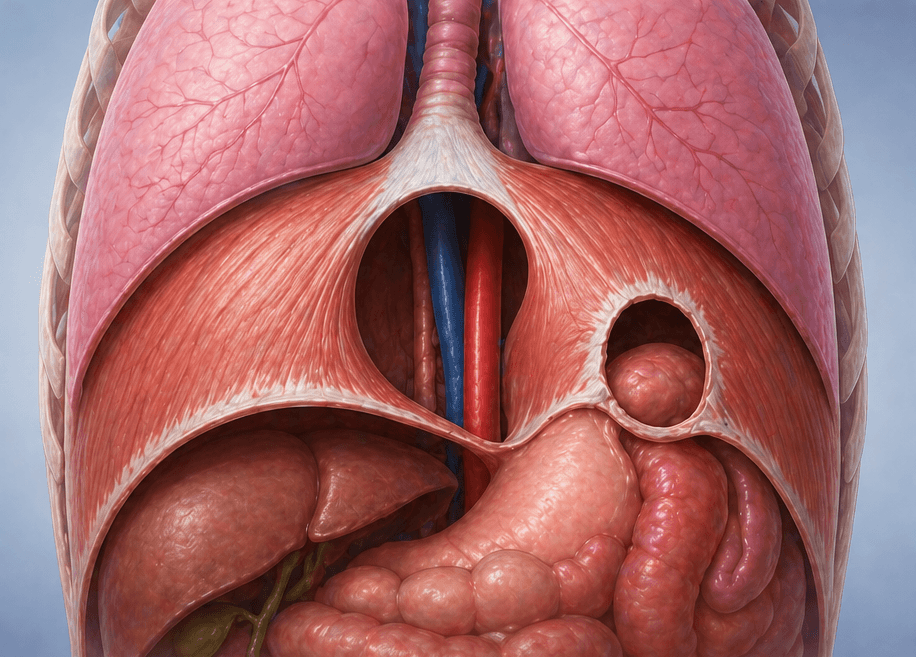
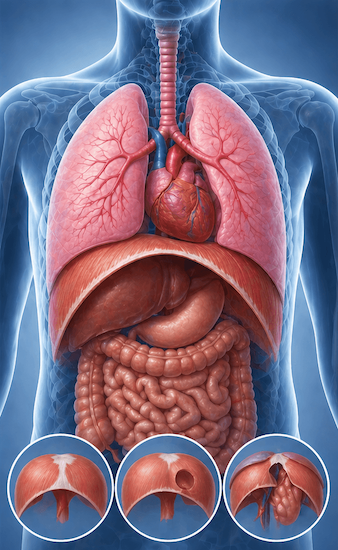
Diaphragmatic Hernia
A diaphragmatic hernia occurs when abdominal contents herniate through a defect in the diaphragm into the thoracic cavity. Hernias may be congenital or acquired.
Congenital Diaphragmatic Hernia (CDH), most commonly the Bochdalek hernia (posterolateral defect), is a neonatal surgical emergency. The herniation of intestines, stomach, and spleen into the developing chest cavity compresses the foetal lung, causing ipsilateral pulmonary hypoplasia and, often, contralateral hypoplasia. Despite advances in neonatal surgery and ECMO (extracorporeal membrane oxygenation), CDH carries significant mortality related to pulmonary hypertension and lung underdevelopment.
Morgagni hernia, through the anterior retrosternal gap, is rarer and more often diagnosed in adults, frequently as an incidental finding. It typically contains omentum or transverse colon and is repaired laparoscopically.
Hiatus Hernia and Its Distinction
Hiatus hernia, herniation of the stomach through the oesophageal hiatus, is distinct from other diaphragmatic hernias and is primarily managed by oesophago-gastric surgeons. Type I (sliding hiatus hernia) is the most common cause of gastro-oesophageal reflux disease. Types II, III, and IV (paraoeosphageal hernias) involve herniation of the gastric fundus and, in severe cases, the entire stomach and other organs into the chest, and require surgical repair due to risks of obstruction and strangulation.
Traumatic Diaphragmatic Rupture
Diaphragmatic rupture most commonly results from high-velocity trauma, road traffic accidents, falls, blast injuries, and penetrating wounds. The left hemidiaphragm is more commonly affected (80% of cases) because the liver protects the right side. Diagnosis is frequently delayed, as acute trauma obscures the diaphragmatic injury. CT chest and abdomen is the most sensitive diagnostic tool. Acute ruptures are repaired at emergency laparotomy or thoracotomy; chronic hernias (presenting months to years later with obstructive symptoms) require elective repair, which may be more complex due to adhesions.
Diaphragm Plication for Phrenic Nerve Palsy
Diaphragmatic Eventration
Diaphragmatic Tumours
Diaphragmatic Involvement in Thoracic Surgery
Diaphragm Condition Requiring Expert Evaluation?
Book Appointment

+91-9920024001
9920024001